Tips
Auto Repair Shop For Sale In Massachusetts: Buyer Guide
Massachusetts is one of the most vehicle-dependent states in the Northeast. Harsh winters, salted roads, and an aging vehicle fleet create a constant need for
Massachusetts is one of the most vehicle-dependent states in the Northeast. Harsh winters, salted roads, and an aging vehicle fleet create a constant need for maintenance, collision work, and body repair.
The Bay State offers a range of auto repair shop opportunities. Listings span from Boston and Norwood to Cape Cod, the Merrimack Valley, and Western Massachusetts, so you can match a shop to your budget, lifestyle, and growth goals.
This guide covers what’s available, how to compare deals, what to inspect before buying, how to review the financials, and how to finance your purchase.
What Buyers Will Find In The Massachusetts Market
The auto repair landscape in Massachusetts includes a broad mix of business types, property sizes, and deal structures. You’ll find independent service garages, collision and auto body operations, and mixed-use automotive properties, each with its own pros and cons.
Independent Repair Shops And General Service Garages
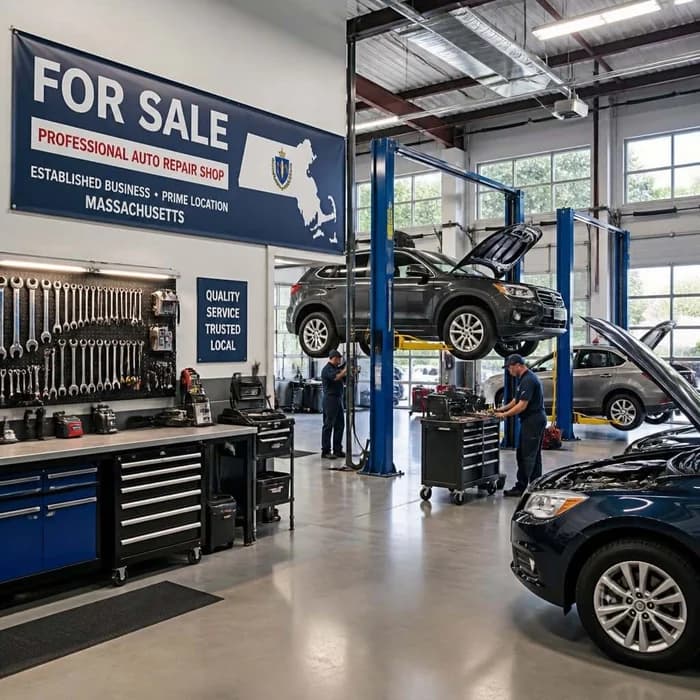
Independent repair shops are the largest category of auto repair businesses in Massachusetts. These range from small two- or three-bay garages in towns like Holden and Winthrop to larger multi-bay facilities near high-traffic corridors in Framingham, Norwood, and South Dartmouth.
Many of these shops handle general maintenance, state inspections, diagnostics, brake work, and exhaust service. Their appeal is simplicity: a loyal customer base and a straightforward service menu.
Most are owner-operated with a small team of technicians. Look for shops on busy roads with good visibility, enough parking, and services that match your skills or the team you plan to hire.
Collision And Auto Body Operations
Collision repair and auto body shops require more equipment and have different revenue drivers. In Massachusetts, you’ll find turnkey collision repair facilities in towns like Medway and Methuen that come with real estate, spray booths, lifts, frame straightening equipment, and insurance company relationships.
These operations often generate revenue through insurance-paid work, providing a more predictable income stream. They must comply with environmental regulations, and equipment like spray booths can be expensive to replace.
If the shop has Direct Repair Program (DRP) agreements with insurers, that’s a valuable asset.
Mixed-Use Automotive Sites And Dealership Conversions
Some Massachusetts properties blend categories. You might see a former GMC dealership on a seven-acre lot with five oversized service bays, or a site that combines repair bays with a retail-ready showroom.
These sites appeal to buyers who want to combine services, such as running a licensed repair operation alongside a used car sales lot, or converting a dealership into a fleet maintenance hub.
Larger lots offer more flexibility if you plan to expand or sell the real estate later. Always verify zoning, permitted uses, and environmental history before committing.
How To Compare Opportunity Types Before You Inquire
Understanding the main deal structures and business models helps you find the right fit. Consider your capital, risk tolerance, and whether you want to take over an existing operation or build one from the ground up.
Business-Only Versus Real-Estate-Included Deals
Some listings sell only the business—operations, equipment, customer base, and brand—while others include the commercial property. A business-only deal usually means you’ll sign a lease, keeping upfront costs lower but leaving you subject to rent increases and landlord decisions.
When real estate is included, your purchase price is higher, but you gain long-term control, potential appreciation, and the option to lease space. Many turnkey collision and auto body listings in Massachusetts bundle real estate, equipment, and business together.
If you plan to stay long-term, owning the property is an advantage. If you want flexibility, leasing may suit you better.
Turnkey Operations Versus Value-Add Projects
A turnkey operation is ready to go on day one. Equipment is set up, staff may stay, customers are coming in, and revenue is already flowing.
You pay a premium for this, but you reduce startup risk. A value-add project needs work—maybe the equipment is old, the customer base has shrunk, or marketing is lacking.
These deals often cost less, and a buyer with operational know-how or fresh capital can improve margins quickly. Be realistic about the effort and money required; replacing lifts or spray booths can cost tens of thousands of dollars.
Retail-Facing Shops Versus Fleet And Specialty Service Models
Retail-facing shops on busy streets rely on walk-in traffic, online reviews, and local reputation. They usually have higher visibility—and often, higher rent or property costs.
Fleet and specialty service models focus on commercial accounts, municipal contracts, or niche work like diesel repair or transmission rebuilds. Revenue per job can be higher and more predictable, but you depend on a smaller group of larger clients.
Think about which model matches your strengths before comparing listings.
The Physical Asset Checklist That Matters Most
The shop’s physical condition affects your ability to generate revenue, stay compliant, and grow. Before signing a letter of intent, walk the property with a critical eye and, ideally, a knowledgeable advisor.
Service Bay Count, Workflow, And Parking Layout
The number of service bays determines how many vehicles your team can work on at once. Listings range from two-bay shops to facilities with five or more oversized bays.
More bays mean more capacity, but only if the workflow supports efficient movement. Parking matters too.
A shop needs enough lot space for vehicles waiting for service, in progress, and ready for pickup. Tight lots create bottlenecks. Corner lots and properties with multiple entrances usually offer better flow.
Equipment Condition, Compliance, And Replacement Risk
Inspect all major equipment: lifts, alignment machines, diagnostic scanners, tire changers, balancers, air compressors, and spray booths. Ask when each was last serviced.
Lifts have a limited service life, and replacements are expensive. For collision shops, the spray booth is a major asset—check its age, filter condition, and compliance with Massachusetts regulations.
Non-compliant equipment can lead to fines or shutdowns. Request maintenance records and, if possible, have a third-party inspector check major systems.
Property Features That Affect Expansion Or Resale
Check the building’s roof, electrical capacity (especially if you want to add EV service), plumbing, heating, and insulation. Massachusetts winters are tough on commercial properties, and deferred maintenance can get expensive.
Consider lot size, zoning, and room for expansion. A larger lot with space to add bays or a detached storage building is more flexible than a tight urban parcel.
If you plan to sell later, frontage on a busy road and proximity to highways add value. Look for any environmental liens or prior contamination issues, which are more common with automotive sites.
What To Review In The Financials And Daily Operations
Financial records reveal the true health of an auto repair business. Before getting attached to a location, review the numbers and daily operations.
Cash Flow, SDE, And Revenue Quality
Seller’s Discretionary Earnings (SDE) is the key number for small business buyers. SDE is the total financial benefit to a single owner-operator after adding back the owner’s salary, non-recurring expenses, and discretionary spending.
Most auto repair shop valuations are based on a multiple of SDE. Ask for at least three years of tax returns, profit and loss statements, and bank statements.
Check revenue trends: is the shop growing, stable, or declining? Look for a healthy mix of services rather than reliance on a single revenue stream.
A diversified income—inspections, maintenance, diagnostics, tires, and some body work—makes a shop more resilient.
Staffing, Licensing, And Vendor Relationships
Find out how many technicians work in the shop, their certifications, and if they plan to stay after the sale. Skilled mechanics are hard to replace, and losing them can cripple your operation.
Confirm all required Massachusetts licenses and permits are current and transferable. These may include a motor vehicle repair shop license, state inspection station license, and environmental permits.
Review vendor accounts for parts suppliers. Established trade credit and favorable pricing terms are valuable assets that new buyers sometimes overlook.
Customer Mix, Reputation, And Recurring Demand
An established customer base is a valuable asset. Ask for data on repeat customer rates, average repair order value, and the mix between retail and commercial or fleet accounts.
A shop with many loyal, returning customers is less risky than one that depends on one-time insurance claims or promotions. Check the shop’s online reputation—Google reviews, Yelp, and local forums.
In Massachusetts, word-of-mouth still matters, especially in smaller towns. A strong local reputation and solid online reviews carry real value.
A shop with negative reviews may need rebranding after you take over.
Financing Options And Deal Structure Basics
Most buyers don’t pay for an auto repair shop entirely out of pocket. A solid financing plan and the right deal structure are essential.
When SBA Loans May Fit An Automotive Acquisition
SBA 7(a) loans are common for small business acquisitions, including auto repair shops. These loans typically cover up to 90% of the purchase price, with repayment terms up to 10 years for the business and up to 25 years if property is included.
Interest rates are generally competitive. To qualify, you’ll need a reasonable personal credit score, relevant industry experience or a strong management background, a down payment (usually 10%–20%), and a business with enough cash flow to service the debt.
If the shop includes real estate and fixed assets, those can serve as collateral. Start conversations with SBA-preferred lenders early so you know your borrowing capacity before making an offer.
Asset Purchase Versus Stock Purchase Considerations
Most small auto repair shop acquisitions are structured as asset purchases. In this setup, you buy specific assets—equipment, inventory, customer lists, trade name, and sometimes real estate.
You typically don’t assume the seller’s liabilities, giving you a cleaner start. Stock purchases, where you buy the seller’s entity, are less common but can make sense if the business holds contracts, permits, or insurance relationships that are hard to transfer.
The downside is you may inherit unknown liabilities, like tax issues or environmental problems. Work with a qualified attorney and accountant to decide which structure protects you best.
Working Capital, Equipment Needs, And Post-Close Reserves
The purchase price is only part of the capital you'll need. Plan for working capital to cover payroll, rent, inventory, utilities, and insurance during your first few months.
Revenue may dip slightly during an ownership transition as some customers wait to see how things go. Also, budget for any immediate equipment needs.
If lifts, diagnostic tools, or compressors are near the end of their useful life, you may need to replace them soon after closing. Get a detailed equipment list with ages and maintenance records during due diligence to estimate these costs.
A good rule of thumb is to have at least three to six months of operating expenses set aside as a post-close reserve.
From Search To Close: A Practical Buying Process
Buying an auto repair business usually takes three to six months from your first inquiry to closing day. Having a clear plan helps you stay on track and avoid mistakes.
Screening Listings And Off-Market Leads
Start by defining your buy box—the price range, location, shop size, and business type that fit your goals and budget. Platforms like BizScout let you filter by industry, location, and deal type across thousands of listings, including off-market leads where owners may be open to offers before their business is publicly listed.
Cast a wide net at first, then narrow your focus quickly. Review listing details, photos, and any available financial summaries.
Eliminate shops that don’t match your criteria. For those that do, request a Non-Disclosure Agreement (NDA) so you can review detailed financials and speak directly with the seller or broker.
Making An Offer And Starting Due Diligence
When you find a promising business, submit a Letter of Intent (LOI) outlining your proposed price, deal structure, contingencies, and timeline. The LOI shows serious intent but isn’t binding, and it opens the door to full due diligence.
During due diligence, verify everything. Review tax returns, bank statements, equipment lists, lease agreements, vendor contracts, and customer data.
Inspect the property, test equipment, and interview key employees if possible. For collision repair shops, confirm that insurance DRP agreements will transfer and that spray booth and environmental permits are in good standing.
If anything material doesn’t match what was represented, renegotiate or walk away.
Closing, Transition Planning, And First 90 Days
At closing, you’ll sign the purchase agreement, transfer funds through escrow, and take legal ownership of the business and property if applicable. Your attorney should handle closing documents, lien searches, and required filings with the Massachusetts Secretary of State.
Plan the transition carefully. If the seller can stay on for a few weeks to introduce you to key customers, vendors, and staff, take advantage of that.
The first 90 days are critical. Focus on retaining customers, keeping the team stable, and learning the shop’s daily operations before making major changes.
Small improvements, like updating signage, improving the waiting area, or starting a simple loyalty program, can build goodwill quickly without disrupting operations.
Frequently Asked Questions
What should I look for when evaluating the financials of an established repair shop business?
Focus on Seller's Discretionary Earnings (SDE), revenue trends over at least three years, and the consistency of monthly cash flow. Check the mix of revenue sources, parts-to-labor ratios, and whether the business relies heavily on any single customer or insurance relationship.
Are there repair shops available for purchase directly from the owner, and what are the pros and cons?
Yes, owner-direct listings are available in Massachusetts and on platforms like BizScout. Buying directly can reduce broker commissions and give you more direct communication with the seller.
The downside is that owner-listed deals may lack professional packaging, so financials might be less organized and the seller may have unrealistic pricing expectations.
How can I find listings for repair or body shops for sale near my area?
Online marketplaces are a good starting point. BizScout, for example, offers map-based search, AI-powered matching, and access to both listed and off-market opportunities across many industries.
You can also connect with local business brokers who specialize in automotive transactions in Massachusetts.
What licenses, permits, and inspections do I need before taking over an existing shop?
In Massachusetts, you’ll typically need a motor vehicle repair shop license. If the shop does state safety or emissions inspections, a separate inspection station license is required.
Environmental permits may apply if the shop operates a spray booth or handles hazardous waste like used oil or solvents. Confirm with your attorney that all permits are transferable before closing.
What are common lease terms to watch for if the shop location is rented rather than owned?
Pay attention to the remaining lease term, renewal options, rent escalation clauses, and any restrictions on business type or signage. A short remaining lease with no renewal option is a risk because you could lose your location.
Also check who is responsible for maintenance, roof repairs, and environmental compliance under the lease.
How do I estimate the cost of equipment, lifts, and tools included in a shop sale?
Request a complete equipment list with the make, model, age, and condition of each major item. Compare these items to current market prices for used equipment.
Vehicle lifts, spray booths, alignment machines, and diagnostic scanners are usually the most valuable assets. Have a qualified technician or equipment appraiser inspect the major items and estimate their remaining useful life.
This helps you budget for replacements in the near future.
Ready to see what’s available? Browse auto repair shop listings in Massachusetts on the BizScout marketplace.
You’ll find over 20,000 vetted listings, verified sellers, off-market deals, and analyst-grade tools like ScoutSights™ to help you evaluate options. Creating a free account takes just a minute and is the quickest way to start building your pipeline.