The narrative
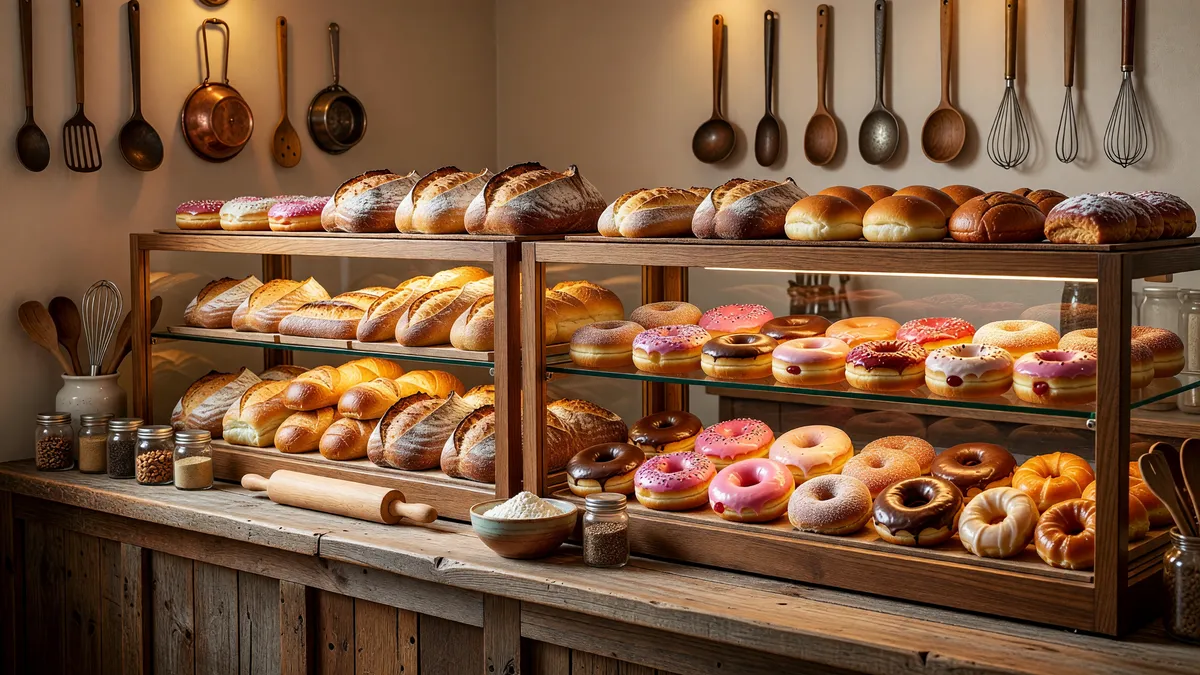
A look inside Established Specialty Bread and Donut Bakery, Semi-Absentee.
This is the store the brand was built on. The founders opened it in 2014 and have run it for twelve years, growing it into the flagship and top-performing location of a regional specialty bakery brand. The brand now spans the founders' own stores and a network of five independently licensed operators, with two more opening in the Bay Area and on the East Coast. The concept has been proven enough that other people are paying to open it, and this listing is the chance to own the location that proves it best.
Filipino-rooted specialty bread rolls make up about 65% of sales and gourmet donuts the remaining 35%, all sold at retail across the counter seven days a week. The store sits near a major regional airport and draws out-of-state customers the brand's other locations don't see, while roughly 60% of revenue comes from local repeat customers. No single customer is material.
The store has produced roughly $2 million in annual revenue for three consecutive years: $2.1 million in 2023, $2.3 million in 2024 and $1.9 million in 2025. Cost of goods has held near 20% of sales throughout, a gross margin above 75%. 2025 was the buildout year for the brand's central production facility, and the dip reflects the founders' attention and capital going there rather than any change in demand. The 2026 year-to-date financials in the data room show the store now that the transition is complete.
That transition is the reason to look now. The brand's new central production facility makes the core bread products for every location, so the baking labor that used to sit in this store's back of house has moved off the payroll. Headcount has dropped roughly in half, waste is down, and the stockouts that used to cap sales on busy days are gone. A buyer inherits that operating model on day one.
A general manager with more than three years in the role runs the store, supported by supervisors and a full-time front-of-house lead on each shift. About 20 people work in the store, most part-time. New staff are productive within two days, managers are promoted from within, and tenure is strong for the category. The owners check the weekly schedule, run payroll and drop off inventory. No baking or floor labor is performed by ownership.
The store occupies a suite in an established shopping center in a growing Sacramento-area neighborhood, with about two years left on the lease and annual increases near 3%. The owners report rent is the lowest in the brand's portfolio at roughly 4% of sales. The landlord has historically asked the owners to renew, and assignment and extension will be handled at closing. Roughly $350,000 of equipment is included.
The store is sold as a licensed location. The buyer forms a new entity, acquires the assets and lease free of seller debt, and signs the brand's standard license agreement on the same terms as the other operators: 5% of sales, covering the brand, recipes, product from the central facility and brand-level marketing. The founders stay in business with every operator after the sale through what they call their Owners Club, and are open to seller financing for the right buyer.
The owners are selling to redirect capital and attention to the production facility and the operator network, and they want a strong operator in their best store because it stays connected to the brand. For a buyer, that is the pitch: the brand's proven flagship, the hardest labor already moved off-site, a manager who already runs it, and a supply chain and founder relationship that remain in place after the sale.